

…to the 4th Power The Biblical Skeptic
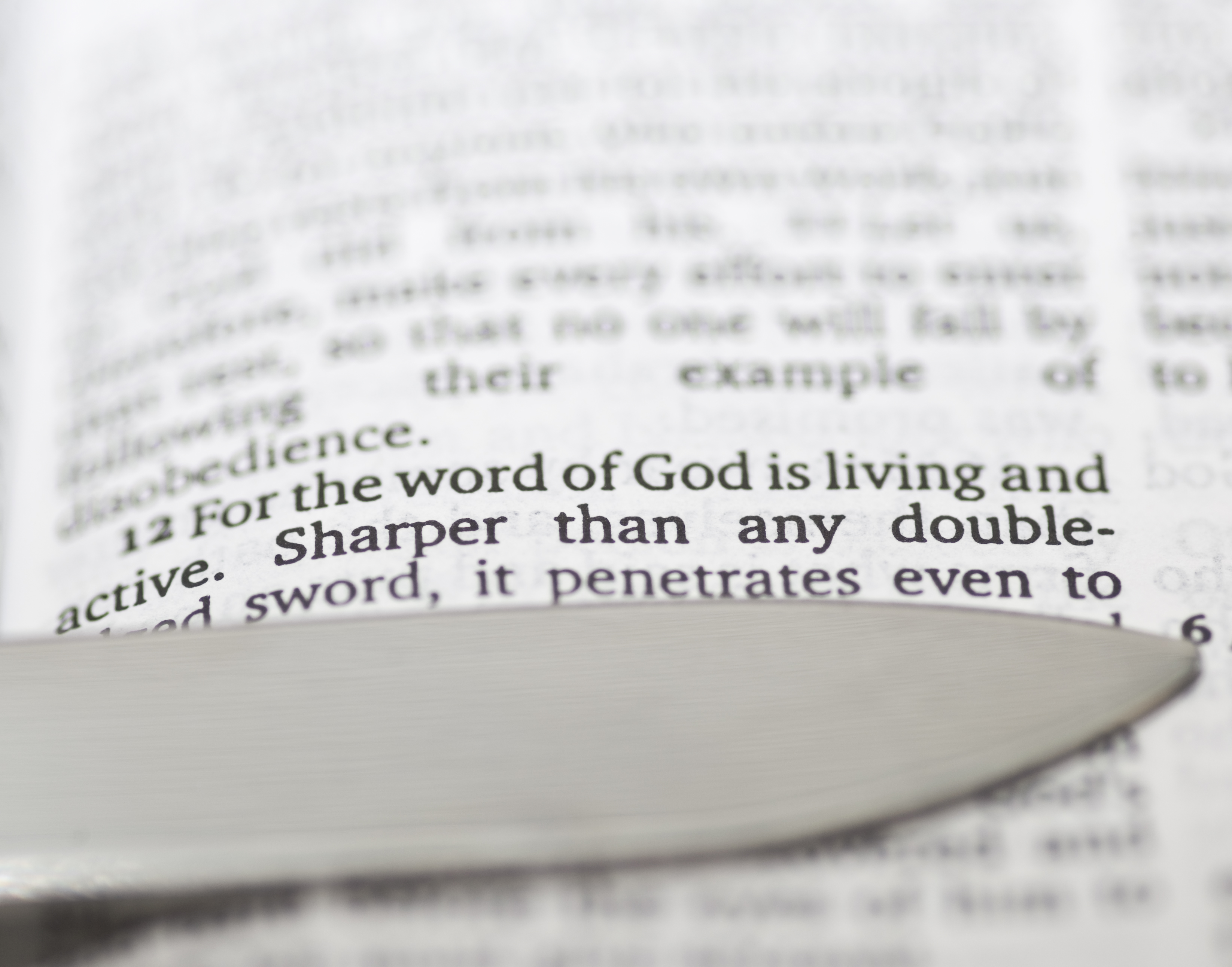
“For the word of God is living and active, sharper than any two-edged sword, piercing to the division of soul and of spirit, of joints and of marrow, and discerning the thoughts and intentions of the heart. Hebrews 4:12 (ESV)
There are some polls out there that say that sixty-five percent of Americans believe The Bible answers all or most of the basic questions of life. There is no denying that God’s Word contains life experiences that are as relevant today as they were in the yesterdays. So why is it that a Biblical worldview has only been able to be attained by about nine percent of us? Maybe it is a problem in the understanding of it definition? You might ask “What is its definition?” Well, here it is…
1. Absolute moral truth exists…it doesn’t need to be voted on
2. Good works cannot earn a person to Heaven…it’s about the fruit
3. The Bible is totally accurate in all of its teachings…just read Proverbs
4. Jesus lived a sinless life…’nough said there, Amen?
5. Satan is a real being…and his job is to leave shopping carts in any available parking spaces at Wal-mart. (Well not really but it sure can seem that way on rainy days)
6. God is the all-knowing, all powerful ruler of creation…El Elyon Elohim
Now that the Biblical worldview has been defined why would people rely on other ancient writings (yet question the Bible’s reliability) like that of Homer or Aristotle? Or how about a more recent writer who penned titles like “Human, All Too Human” and “Beyond Good and Evil”, Friedrich Nietzsche? Well I think in terms of ancient writers they are so far in the past that we can’t rely there being any original manuscripts left and that is key to getting the authors true intent. Besides, the library in Alexandria, Egypt burned down back in the ancient times so there aren’t any originals to really speak of. And as far as Nietzsche goes, his human condition was in serious disarray as he wrote so I would contend that his view point came from that of madness.
In the Book of Acts, chapter 26, Luke gives us an accurate account with all the details to prove that there was a reluctance on Festus’ part to believe Paul. King Agrippa even states later on in the passage that he is almost persuaded to become a Christian. This tells us that us that God’s Word gives us both sides of dispute when it comes to rightly dividing His Word. In 2Peter 1:16 Peter comes right out and says, “For we did not follow cleverly devised myths when we made known to you the power and coming of our Lord Jesus Christ, but we were eyewitnesses of his majesty.” As you continue to read that passage along you realize that Peter is a witness to Christ Jesus coming to us and not a man who fabricated a story.
What needs to be brought up here is that The Bible was written by men under the influence of the Holy Spirit but The Bible is not man-made. The skeptic, with his worldview of Secularism thinks there is nothing eternal or sacred; therefore man’s ideas are frame-worked into the here and now. So we need to ask them, “If God really gave us a book, how would we know it came from Him?” Then help them walk through the ordinary and the extraordinary because they are both tied together. The Bible is honest about people and can be backed up by history and at the very least we can find ourselves in one of the Bible characters that shaped our need for a Savior to come and bring reconciliation between the creation and the Creator. – Chris Hughes graduated from the Colony of Mercy and is a weekly blogger for Freedom Fighter
Daily Bible Reading: Psalm 57-59; Acts 21:18-40
Quote of the day: “We should make it clear to the skeptic that we don’t believe just because “the Bible says so,” but because its authenticity is consistent with history and its accurate, extensive, and vivid depiction of the human condition.”—Bill Foster
Verse to Memorize: Your righteousness is everlasting and your law is true. Troubles and distress have come upon me, but your commands are my delight. Psalm 119:142-143
 Freedom Fighters