A Step Back

A Step Back

Today’s Freedom Fighter will be brief and to the point. I am writing to you to get some input from you. For the past six or seven months there has been very little feedback from the guys on the list about the effectiveness of this ministry.

I am at that weird stage of life where at 57 (I can’t believe I am that old!) I want to be doing the RIGHT things. I am not looking for a pat on the back, out an “atta-boy” – but if the Freedom Fighter blog is not helping you, that feedback would be valuable. I don’t want to just fill your inbox with another piece of mail that you simply delete or discard.
If you would like to see other issues addressed, that feedback would be a big help to me. I enjoy writing this blog, but if it is not effective, then I need to know that.
You can simply put your comments on the blog or email me at bwelte@americaskeswick.org. I look forward to hearing from you. Thanks in advance for your comments. – Bill Welte is President and CEO of America’s Keswick

GPS – God’s Positioning System: Matthew 9-10; Psalm 96; Proverbs 13

Compass Pointers: Whatever man loves, that is his god. For he carries it in his heart; he goes about with it night and day; he sleeps and wakes with it, be it what it may – wealth or self, pleasure or renown. Martin Luther
Navigation Rules to Memorize: Level 1: John 14:13-14; Level 2: John 14:1-6
Anchored to the Rock: The once concern of the devil is to keep the saints from praying. He fears nothing from prayerless studies, prayerless work, prayerless religion. He laughs at our toil, he mocks at our wisdom, but he trembles when we pray. Samuel Chadwick

The Nail

THE NAIL
“Out of him came forth the corner, out of him the nail.”  (Zechariah 10:4)

            Having spent quite a few of my earlier years as a carpenter, I am always intrigued by words in the Bible that mention something about this trade.  Hence, “nail” was one that aroused my curiosity.
            First, we must determine the antecedent of “nail” to learn its meaning.  The context shows us it is Judah.  The “corner” or cornerstone will come from this tribe.  We see by cross referencing Isaiah 28:16, Romans 9:32; I Corinthians 1:23; I Peter 2:6-8 and Ephesians 2:20 that the prophet Zechariah is speaking of the “chief cornerstone” who would come out of Judah is none other than Jesus Christ.
            But, “the nail” is also coming out of Judah.  What is Zechariah telling us?  To answer this we must compare it with other Scriptures.  Turning to Isaiah 22:21 we learn about Eliakim.  However, as is often the case, this passage goes far beyond Eliakim.  It speaks of one who will become very special to the inhabitants of Jerusalem and the house of Judah.  As the head of government he will have the key of the house of David, and “I will fasten him as a nail in a sure place: and he shall be for a glorious throne to his father’s house.  And they shall hang upon him all the glory of his father’s house” (Isaiah 22:23b-24a).
            To comprehend this passage we must consider a passage in Genesis 31.  Jacob and Rachel had left Laban, she had stolen her father’s idols, and he came looking for them.  Rachel had put them in the camel’s furniture and sat on them, preventing Laban from finding them.  These idols were always hung on a nail that was fastened to the center post of the tent and received all the glory of those entering the house.
            By going back to Isaiah 22, we find that all the glory of His Father’s house will hang upon this one.  Guess who it is!  Both Isaiah and Zechariah are portraying Jesus Christ as the one who is the “nail” upon whom all the glory of God is to be focused.

            The question we must ask ourselves is this.  Do we allow Him to be the “nail,” the very center of our lives?  Dr. Fred H. Hartman serves as an itinerant Bible teacher, and is a contributor to REAL VICTORY FOR REAL LIFE
GPS – God’s Positioning System: Matthew 8:14-34; Mark 4-5; Psalm 95; Proverbs 12
Compass Pointers: When spiritual comfort is sent to you by God, take it humbly and give thanks meekly for it. But know for certain that it is the great goodness of God that sends it to you, and not because you deserve it. See to it, then, that you are not lifted up to pride because of the comfort, and that you do not rejoice too much in it or presume vainly in it; instead, seek to be more humble for so noble a gift, and the more watchful and fearful in all your works. That time of comfort will pass away, and the time of temptation will follow shortly after. It is not a good policy to let your lusts bear arms, which are sure to rise and declare against you. Thomas a Kempis
Navigation Rules to Memorize: Level 1: John 14:13-14; Level 2: John 14:1-6
Anchored to the Rock: Within God’s limitations prayer is unlimited. J. Edwin Hartill

Train in the Right Direction

Train in the Right Direction
The mature … have their powers of discernment trained by constant practice to distinguish good from evil. Hebrews 5:14
Wow – did you ever have to practice? An instrument? A sport’s game? Most of us struggle with that word – but the writer of Hebrews not only reminds us that we need to practice, but it is CONSTANT in learning to distinguish between good and evil.
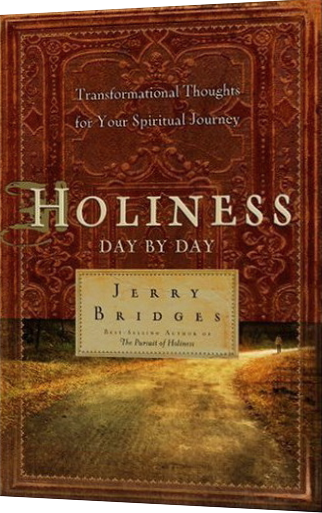
Grace writer, Dr. Jerry Bridges, gives this powerful commentary on this verse: Paul exhorted Timothy, “TRAIN yourself for godliness” (1 Timothy 4:7). Though godliness is a broader concept than holiness, holiness is a major part of it, so training ourselves to be godly certainly includes training in holiness.
God wants us to train ourselves in the right direction through making right choices. Frankly, this is where the going gets tough. We’ll agree with Scripture’s teaching about some particular sin and even make a commitment of sorts to put it out of our lives. Then the temptation to indulge in that sin comes once again, and we’re unwilling to make the tough choice. We would like to be rid of that sin, and even pray to God to take it away, but we are unwilling to say no to it?

Every day we’re training ourselves in one direction or the other: toward lying or truthfulness; selfishness or unselfishness; anger or forgiveness; impurity or purity; irritability or patience; covetousness or generosity; pride or humility; materialism or simplicity.

Only through making the right choice to obey God’s will we break the habits of sin and develop habits of holiness. This is where we desperately need the Holy Spirit’s power to enable us to make the right choices. So cry out to God every day for His help; cry out each time you are confronted with the choice to sin or to obey. (Holiness Day by Day – Transformational Thoughts for Your Spiritual Journey – Navpress)

What is it that you need to deal with today? My guess is that it isn’t rocket science for you to figure it out. Let’s purpose together to keep training so that we can be the men God wants us to be. – Bill Welte is President and CEO of America’s Keswick
GPS – God’s Positioning System: Matthew 13; Luke 8; Psalm 94; Proverbs 11
Compass Pointers: “This passive righteousness is a mystery that…Christians never completely understand themselves, and thus do not take advantage of it when they are troubled or tempted.  So we have to constantly teach it, repeat it and work it out in practice.  For anyone who does not understand this righteousness or cherish it in the heart and conscience, will continually be buffeted by fears and depression.  Nothing gives peace like this passive righteousness.” Martin Luther, Preface to Galatians
Navigation Rules to Memorize: Level 1: John 14:13-14; Level 2: John 14:1-6
Anchored to the Rock: Unity of prayer combined, like drops of water, make an ocean which defies resistance. E. M. Bounds

The Letters of the Law Part 3

The Letters of the Law Part Three 

Don’t forget Men’s Fellowship Night this Thursday. Pastor Bob Nash from Building on the Rock will be our guest speaker. Dinner at 6:15 PM followed by a great service of praise and then fun in the Activity Center. Call for reservations: 732-350-1187
“For I bear them witness that they have a zeal for God, but not according to knowledge. For, being ignorant of the righteousness of God, and seeking to establish their own, they did not submit to God’s righteousness. For Christ is the end of the law for righteousness to everyone who believes.” Romans 10:2-4 (ESV) 

So now after our line by line session with the “Law” and all that chatter about some word, “antinomianism”, we can move into Paul’s encounter with Christ on the Damascus road. In some Bibles , like the ESV, when we get to the ninth chapter of Acts we see the title “The Conversion of Saul.” This conversion of Saul happens after the stoning of Stephen. This “stoning” may look like a martyr’s death to some but to put on a matter of fact level it was an act of murder that the Roman government of that time turned a blind eye to. Frenzied acts like this by Jewish hierarchy may have received a Roman wink and nod but it wasn’t allowed to become everyday living.  

I mention the Stephens martyrdom because it took that event for us to see the zealousness of law enforcement. The rabbi’s of that time thought human history was sectioned off into three zones. The zone of chaos between Adam and Moses, the zone of the “Torah” which lasts from Moses to the Messiah and then the zone of the Messiah. Since those rabbi’s couldn’t accept The Messiah from a manger, they used or they bent the Law to ensure that the Mosaic view of the Law remained the absolute. I wonder if they thought they would be the ones The Father would use to announce the Messiah and not what we read in Luke’s account? Hmmm… 

Anyway, as Paul describes when God “was pleased to reveal His Son to me” or where “Christ Jesus has made me His own” he arrives at the place of understanding. For all that commitment to the Law and zeal to uphold it, he comes to that place where he now knows he has actually opposed the purposes of God. Paul had fought against the breaking in of the Messianic Age ( Now these things happened to them as an example, but they were written down for our instruction, on whom the end of the ages has come.–1 Cor 10:11 ESV) by the extreme act of trying to keep the Law. The Bible doesn’t say how much of Jesus Saul may have heard or understood while he was out holding robes for the guys while they had a good ole’ fashioned stonin’ but he did come to this understanding. 

“Wretched man that I am! Who will deliver me from this body of death? Thanks be to God through Jesus Christ our Lord!” (Rom 7:24-25 ESV) And why? Because Jesus Christ is the end of the Law, that’s way!! The word end or telos can be viewed as either the outcome, the purpose, the goal to which something is directed, or the “end,” “cessation”. There have been many interpreters who believe that  both meanings get tied up in our English translations. So…let’s see here, hmm….change a word, keeping the meaning upfront and just maybe….I think I can say this. Jesus Christ is the outcome of the Law. After all if you are His and He is yours and He boiled the Law down to these two commandments…“You shall love the Lord your God with all your heart and with all your soul and with all your mind. This is the great and first commandment. And a second is like it: You shall love your neighbor as yourself. On these two commandments depend all the Law and the Prophets.”  

So I wonder what the Antinomianist would say to Jesus? How would they feel about the two commandments being the central idea for spiritual living? I am glad that I stumbled across this word “antinomianism.” It has taken me through a journey where I got to see the Law differently and gave me a chance to dig into a hard saying of Paul’s. “For Christ is the end of the law for righteousness to everyone who believes.” Now I understand that Jesus Christ just might be the outcome of the Law and it that I can examine the Deuteronomical wonder that are the only two commandments we need to keep. Could it always have been this simple? – Chris Hughes is a frequent Freedom Fighter contributor and a graduate of the Colony of Mercy

GPS – God’s Positioning System: Matthew 12:22-50; Psalm 93; Proverb 10
Compass Pointers: “Grace always comes by Jesus Christ. It didn’t come at His birth, but it came in God’s ancient plan. No grace was ever administered to anybody except by and through and in Jesus Christ.” The Radical Cross  A.W. Tozer

Navigation Rules to Memorize: Level 1: John 14:13-14; Level 2: John 14:1-6
Anchored to the Rock: Prayer is the key to heaven’s treasures. John Gerhard

Holy, Holy, Holy

Holy, Holy, Holy

“ … And one called to another: Holy, holy, holy is the Lord of Hosts; His glory fills the whole earth.” Isaiah 6:3
Growing up we sang this hymn every Sunday morning at the beginning of the worship service. Back then it seemed more like repetition, but it has become one of my very favorite hymns of worship:

Holy, Holy, Holy! Lord God Almighty!
Early in the morning our song shall rise to Thee;
Holy, Holy, Holy! Merciful and Mighty!
God in Three Persons, Blessed Trinity!
Holy, Holy, Holy! All the saints adore Thee,
Casting down their golden crowns around the glassy sea;
Cherubim and seraphim falling down before Thee,
Which wert, and art, and evermore shalt be!
Holy, Holy, Holy, though the darkness hide Thee,
Though the eye of sinful man Thy glory may not see,
Only Thou are Holy, there is none beside Thee,
Perfect in power, in love, in purity!
Holy, Holy, Holy! Lord God Almighty!
All Thy works shall praise Thy name, in earth and sky and sea;
Holy, Holy, Holy! Merciful and Mighty!
God in Three Persons, Blessed Trinity! – Reginald Heber
Take some time today to worship Him – really worship Him! He is the ONLY ONE who we can declare – Holy, Holy, Holy! Lord God, Almighty! HE and HE ALONE is worthy of our praise. – Bill Welte is President and CEO of America’s Keswick
GPS – God’s Positioning System: Matthew 11; Psalm 92; Proverbs 9
Compass Pointers: In our worship there should be the power of the supernatural which brings home a sense of God. – Byran Greer
Navigation Rules to Memorize: Level 1: John 14:13-14; Level 2: John 14:1-6
Anchored to the Rock: The men who have done the most for God in this world have been early on their knees. E. M. Bounds
Our Men’s Fellowship begins this Thursday night, October 13th. Pastor Bob Nash from Building on the Rock is our speaker. Dinner, worship and fun all begin at 6:15 PM. Call 732-350-1187 today to make a reservation. Come bring a friend!

The Letters of the Law Part 2

The Letters of the Law
Part Two 
“For I bear them witness that they have a zeal for God, but not according to knowledge. For, being ignorant of the righteousness of God, and seeking to establish their own, they did not submit to God’s righteousness. For Christ is the end of the law for righteousness to everyone who believes.”  Romans 10:2-4 (ESV) 

Yesterday I told you about a new word that I had come across, “antinomianism” and maybe I will segue back to it, however today I would like to cover what Paul had to say about “The Law” from the Book of Romans. And by using a few points from the book “Hard Sayings of Paul” by Manfred Brauch in kinda like in a line by line format we can see how this all can just pop out and make itself known to the Freedom Fighter world. There was stuff there I believe we oughta know. Such as… 

When we read things like “another law waging war against the law of my mind” (Rom 7:23) or “the law of the Spirit of life” (Rom 8:2) or “the law of faith” (Rom 3:27) that Paul writes about in the Book of Romans, we see that “law” is being used figuratively. To kinda give this a technical point of view we could say that the term law is being used to denote realities which help regulate life for the pagan or the Christian, get it? But Paul really only had the Mosaic Law to look through, a law that went back to the time of Moses and had regulated life for Israel for like a really long time, right? So the first thing to look into is Paul’s own understanding and experience of the law. 

Paul was “a Hebrew of Hebrews; as to the law, a Pharisee; as to zeal, a persecutor of the church; as to righteousness under the law blameless.” (Phil 3:5-6) This law was God’s law; it expressed God’s will and God’s purposes for His people. To obey this law was to be obedient to the will of God and, as a rabbi, Paul knew this law very well, “So the law is holy, and the commandment is holy and righteous and good.” (Rom 7:12 ESV) He knew it that is spiritual, “For we know that the law is spiritual, but I am of the flesh, sold under sin.” (Rom 7:14 ESV) That it comes from God, “For I delight in the law of God, in my inner being,” (Rom 7:22 ESV) and that it leads us into a real life, “The very commandment that promised life proved to be death to me.” (Rom 7:10 ESV) 

As that Hebrew of Hebrews, Paul understood the privilege to possess the law was a gift of God’s grace, “Then what advantage has the Jew? Or what is the value of circumcision? Much in every way. To begin with, the Jews were entrusted with the oracles of God.” (Rom 3:1-2 ESV) He knew there was going to be accountability within the possessing the gift of the Law. “But if you call yourself a Jew and rely on the law and boast in God and know his will and approve what is excellent, because you are instructed from the law”— and to continue on to qualify as, “a guide to the blind, a light to those who are in darkness.” (Rom 2:17-19 ESV) Since we can see that one was obligated to keep the Law (Romans 2:17-24) and according to his own testimony, Paul believed the keeping of the Law was do-able. 

But with concern or regard to this obligation, Paul was blameless (Phil 3:6). This all changed with experience with Jesus Christ on that dusty road to Damascus. So how much of “The Law” do you think is necessary to keep in our everyday life? The Antinomianist just might say no to that but I think there are reasons why the law is good and so did Paul. But I would reckon it to ourselves that an encounter with Jesus Christ would give us the kind of authoritative interpretation needed to not go crazy with enforcing it in the way Saul of Tarsus did. Tomorrow I would like to cover the ripple effect of Paul’s encounter with the Messiah but as I close today I pose this question to all of us. Has our encounter produced a ripple effect to those around us or are we all just striving to be a Biblical enforcer? Hmmm…. Chris Hughes is a graduate of the Colony of Mercy and a regular Freedom Fighter contributor 

GPS – God’s Positioning System: Matthew 8:1-13; Luke 7; Psalm 91; Proverbs 8
Compass Pointers: “One very effective restraint is the force of conscience: Paul says, “When Gentiles who have not the law do by nature what the law requires, they are a law to themselves, even though they do not have the law. They show that what the law requires is written on their hearts, while their conscience also bears witness and their conflicting thoughts accuse or perhaps excuse them.” (Romans 2:14-15) Systematic Theology   Wayne Grudem

Navigation Rules to Memorize: Level 1: John 13:34-35; Level 2: John 13:31-35
Anchored to the Rock: Prayer is the sovereign remedy. Robert Hall

The Letters of the Law Part 1

The Letters of the Law
Part One 

“For I bear them witness that they have a zeal for God, but not according to knowledge. For, being ignorant of the righteousness of God, and seeking to establish their own, they did not submit to God’s righteousness. For Christ is the end of the law for righteousness to everyone who believes.”  Romans 10:2-4 (ESV) 

I have stumbled over a new word in my life and I have no idea how to use it as a normal everyday word. It doesn’t even look like a normal everyday word either. The word is Antinomianism. This is a term that was coined by Martin Luther and according to Wikipedia; this word is defined as “holding that under the gospel dispensation of grace, the moral law is of no use or obligation because faith alone is necessary to salvation.” Now keep in mind that when Luther realized the truth of justification by faith alone, he became a Christian and then a major reformation in Christendom came from it. That in its self is pretty radical but as for my newly learned word, antinomianism, well let’s just say it too can go extreme. 

The apostle Paul spent a lot of time dealing with people who had the notion that obedience to a code of religious law earned salvation and it has led to a hard saying. That saying is found in Romans 10:4, “For Christ is the end of the law for righteousness to everyone who believes.” Now this isn’t the only place in Paul’s work that he deals with the letters of the law but this would be considered one of his hard sayings concerning it. And the arguments for and against the truth of justification by faith alone had begun before Paul even got off any given boat in any given port. Paul took on the challenge by answering the questions concerning the relationship between the Law of the Father and Faith in the Son. And he had to do this in a pagan world that was being told they had to be a Hebrew first and a Christian after. Can you hear the opening bell? 

Well before the ring announcer gets going let me come right out and say that antinomianism was and still is considered some sort of heresy. The extreme swing of its pendulum is that we don’t have to obey the Ten Commandments nor do we need them as a moral compass for our everyday living. Luther himself was accused of rejecting the Old Testament moral law because he spoke out against the ceremonial law of the Church. In “An Introduction to St. Paul’s Letter to the Romans” Luther boldly states, “Faith cannot help doing good works constantly. It doesnt stop to ask if good works ought to be done, but before anyone asks, it already has done them and continues to do them without ceasing. Anyone who does not do good works in this manner is an unbeliever…Thus, it is just as impossible to separate faith and works as it is to separate heat and light from fire!” 

Now there is a positive swing that also needs to be mentioned and that is antinomianism doesn’t always imply a total disregard for codified moral codes but rather the emphasis on the inner working of the Holy Spirit as our moral compass. But to slice this to the bone it is not justification by faith and does not have right legal standing before the Almighty. The Bible is quite clear that justification is a legal declaration by God. He is the only one that can declare or be declared righteous. So to really dig into this we need to understand the term “law” that is used in Romans 10:4. 

So tomorrow I would like to get into that term know as the “The Law”. And as for my newly found term, “antinomianism” I found it in this book titled, “Hard Sayings of Paul” and it was written by Manfred Brach. It’s another one of those books that a Pastor gives you to read (and basing this Freedom Fighter in) because he knows there is something in there that you oughta know. I will tell you the one thing I do know and it is this…that I have no intention of becoming an “Antinomianist.” Not only is it a really hard word to pronounce but I have had the darndest time trying to use it in a sentence without spell check putting that red squiggly line under it. I guess it even defies the commandments of spelling…I wonder if that it is something we oughta know? – Chris Hughes is a graduate of the Colony of Mercy and a regular Freedom Fighter contributor 

GPS – God’s Positioning System: Matthew 5-7; Psalm 90; Proverbs 7
Compass Pointers: The value of persistent prayer is not that he will hear us, but that we will finally hear him. William McGill
Navigation Rules to Memorize: Level 1: John 13:34-35; Level 2: John 13:31-35
Anchored to the Rock: The church upon its knees would bring heaven upon the earth. E. M. Bounds

The Day After the Day of Reckoning

THE DAY AFTER THE DAY OF RECKONING

Did you know that you died with Christ on the cross?  See yesterday’s Freedom Fighter for details!   But, let it suffice that we must reckon it true.

      For the death he died he died to sin, once for all, but the life he lives he lives to God. So you also must reckon yourselves dead to sin and alive to God in Christ Jesus.  ~ Romans 6:10-11

In reckoning, like an accountant, we consider the funds available in an account, and record the truth in our ledger.  Writing the number down does not make it true.  Rather, the truth of the existence – and the spending power of – the funds is made manifest in the account by the reckoning entry of the accountant.  And once that entry is made, the truth-power of those monies can be brought to bear as needed.

Gloriously, reckoning has nothing to do with feelings or perception.  It does not matter that we feel weird about this death, or that we don’t feel like it happened.  The fact of the matter is that it did happen!  All the lies of our flesh, the evil one, and culture can simply be ignored – and the truth of our old man’s death can be applied in every decision we make in this new life today. (Hint: you do not have to sin.  How VERY cool is that!)

So, in our new life, the old us no longer lives… we must reckon it true that that dead man neither requires (nor deserves) digging up, attention, analysis, validation, recognition, sustenance, encouragement, financing, or friends.

In reckoning this true, we begin to understand that our new life is something entirely different than it was before we met Jesus.  It is a life lived now in the spirit, full of freedom, righteousness, joy and peace in and through His Spirit.  

And beloved, if we could have asked for anything else, we would have asked amiss. In Him, united with Him in His presence, is a life so quiet and peaceful; so very, very real, restful, powerful, joyful and complete. In Him there is no fear, no pain, no shame, no doubt, and no want. And as G_d never changes, we begin to learn that this never has to end.

Oh, to be a poet… i simply cannot find the words…
And, as we reckon the death of this old man true, another dynamic comes into play.  We are ALIVE to Him.  And to be most alive in Him is to be most dead to ourselves.  We now live that He might have total dominion in our existence; that His power might be made manifest in and through us…  let’s leave off here with the words from another brother:
Even the weakest saint can experience the power of the deity of the Son of God, when he is willing to “let go.” But any effort to “hang on” to the least bit of our own power will only diminish the life of Jesus in us. We have to keep letting go, and slowly, but surely, the great full life of God will invade us, penetrating every part. Then Jesus will have complete and effective dominion in us, and people will take notice that we have been with Him. ~ Oswald Chambers

Hey, before we leave… Here is a challenge.  Purpose, by the grace of G_d, to read through the book of Romans every month or two in some purposeful fashion.  The whole Word of G_d should be a regular part of our diets (at least every day), but the book of Romans acts like a massive n-body gravity pool for the Scriptures.  I triple-dog dare you to try and get bored reading (or listening to) the book of Romans; especially chapters 6-8.  Deferring to an expert, Martin Luther wrote:

      This Epistle is in truth the chief part of the New Testament and the purest Gospel. It would be quite proper for a Christian, not only to know it by heart word for word, but also to study it daily, for it is the soul’s daily bread. It can never be read or meditated too much and too well. The more thoroughly it is treated, the more precious it becomes, and the better it tastes.
Makala Doulos is a graduate of the Colony of Mercy. He is a missionary serving in ministry to the poor, and a steward of the blog: blog.ps1611.org. But mostly, he is just one jaw-droppingly grateful recipient of Christ's Love, and has been set free to serve Him without limit.

GPS – God’s Positioning System: Luke 6; Psalm 89:30-52; Proverbs 6
Compass Pointers: Charles Haddon Spurgeon said meekness is being submissive to God’s will and responsive to His Word. When He directs you to do something, He will tell you the manner in which to do it. If His will requires gentleness, He will help you to be tender. If it requires boldness, His power will surge through you to accomplish what He asks. Joy Strang
Navigation Rules to Memorize: Level 1: John 13:34-35; Level 2: John 13:31-35
Anchored to the Rock: The Holy Spirit turns prayer from activity into energy. John Blanchard

The Day of Reckoning

The Day of Reckoning

This act of surrender and this reckoning of faith are recognized in the New Testament as marking a very definite crisis in the spiritual life. It does not mean that we are expected to be going through a continual dying, but that there should be one very definite act of dying, and then a constant habit of reckoning ourselves as dead and meeting everything from this standpoint. ~ A.B. Simpson

Do you not know that all of us who have been baptized into Christ Jesus were baptized into his death?  We were buried therefore with him by baptism into death, in order that, just as Christ was raised from the dead by the glory of the Father, we too might walk in newness of life.  Romans 6:3-4      

The New Testament reveals something clearly throughout its pages.  In some trans-temporal mystery, beyond our ability to comprehend with our intellect (i.e., it is a matter of faith), believers were crucified with Christ.  Not only was our sin paid for by the priceless, perfect blood of Christ – He also took our old man along with Him to slay it in order that we might live free from sin in the future. He died to save us from our sins, and at the same time, He killed our old man to save us from ourselves.  This is simply true.

This is true, and it is not just a “cherry-pick” from one isolated passage of Scripture.  We see the same truth revealed in (at least) Romans 7, 2 Corinthians 5, Galatians 2,5,6, Colossians 3, 2 Timothy 2, 1 Peter 2
Kinda (no really!) makes “It is finished!” even more glorious than what we understood when we first met Him.  Surely, it is beyond-amazing that He saved us from Hell!  Soli Deo Gloria! But, we miss the full benefit of the amazing work Christ did at the cross if we miss the fact that – we too – died in union with Him that day.

      For if we have been united with him in a death like his, we shall certainly be united with him in a resurrection like his. We know that our old self was crucified with him in order that the body of sin might be brought to nothing, so that we would no longer be enslaved to sin. For one who has died has been set free from sin. Now if we have died with Christ, we believe that we will also live with him. We know that Christ, being raised from the dead, will never die again; death no longer has dominion over him. For the death he died he died to sin, once for all, but the life he lives he lives to God. So you also must reckon yourselves dead to sin and alive to God in Christ Jesus. 
~ Romans 6:5-11

So, what’s going on here?  G_d is revealing an epic truth to us.  In Christ, we have died.  And through this, we have been set free from the power of sin in our lives.  This implications of this are gargantuan for our existence – RIGHT NOW.  Now, knowing this is true, the only reasonable response is to put this into play immediately!

But how do we engage the immense power of this truth in our lives?  Through faith (and remember: faith is not just being a member of the club of belief.  Faith is often more like that moment when someone looks at the Word of G_d and says: “Oh my goodness!  It’s TRUE!!!!)… through faith, we reckon it true. 

Tomorrow,  we’ll talk about reckoning and the implications for our lives. -- Makala Doulos is a graduate of the Colony of Mercy. He is a missionary serving in ministry to the poor, and a steward of the blog: blog.ps1611.org.

GPS – God’s Positioning System: Matthew 12:1-21; Mark 3; Psalm 89:1-29; Proverbs 5

Compass Pointers: I myself, for instance, am not especially gifted, and am shy by nature, but my gracious and merciful God and Father inclined Himself to me, and when I was weak in faith He strengthened me while I was still young. He taught me in my helplessness to rest on Him, and to pray even about little things in which another might have felt able to help himself. James Hudson Taylor
Navigation Rules to Memorize: Level 1: John 13:34-35; Level 2: John 13:31-35

Anchored to the Rock: Prayer can do anything that God can do. E. M. Bounds

Honesty — God’s Standard

Honesty—God’s Standard

Yesterday in Sunday School we discussed honesty and truthfulness. We looked at God’s standard for honesty. It is probably is no surprise to anyone who is reading this, but God’s standard is quite different from what is practiced in our society today.

A study done last year and reported in US News and World report said almost two thirds of high school students surveyed said they cheated on a test at least once in the past year. A recent Gallup Poll shows that 57% of Americans rate the honesty and ethical standard of members of Congress as low or very low. It sounded a little too much like Judges 17:6 when the Israelites had no king and everyone did what was right in his own eyes.

The Bible is pretty clear that God demands total honesty. Proverbs 20:23; Proverbs 12:22 and Proverbs 6:16-17 are just a few of the verses that are pretty specific that God detests cheating, dishonesty, and lying. Two of the Ten Commandments are devoted to not lying or stealing. God is obviously concerned about honesty.

But why is God so concerned about our honesty? I believe there are at least three reasons.
The first is because truthfulness is an attribute of God. John 14:6 says I am the way, the truth and the life. If we are going to emulate Christ (1 Corinthians 11:1), we too must be totally truthful and honest. (1 Peter 1:15,16).
The second reason is that it is the opposite of who Satan is. John 8:44 says he is a liar and the father of lies. It is no wonder that God demands total honesty of His children. If we are honest and truthful we reflect God’s character. When we are not, we reflect the character of Satan.

But I believe there is a third reason that God demands total honesty. We are instructed throughout the Bible to love our neighbor. (Leviticus 19:18; Matthew 19:19; Mark 12:31) The parable of the Good Samaritan (Luke 10:30-37) is pretty clear that anyone is our neighbor. And then we read in Philippians 2:4 that we need to look out for the interest of others.So if anyone is our neighbor and we must love them and look out for them, it is pretty hard to be dishonest on our income taxes (yes, the IRS is our neighbor). When we get undercharged on a bill or given too much change, remember it is your neighbor who is being short changed.

There are other reasons that God demands total honesty. It builds creditability for evangelism (Philippians 2:15) and confirms God’s direction (Proverbs 4:24-26) in our lives.

God’s standard for honesty is extremely high. We as followers of Jesus Christ are called to this high standard. Not only are we called to reflect Christ’s charter which is truth, but we must always be looking out for the good of others. Just remember the next time we are tempted to take a few bites from a salad bar that someone else is paying for or sharing a bottomless drink, it is God’s standard of honesty we follow, not the world’s. – George is an instructor with Crown Financial Ministries and the editor of the blog, Stewardship Insights

GPS – God’s Positioning System: John 5; Psalm 88; Proverbs 4
Compass Pointers: Gratitude is our ability to see the grace of God, morning by morning, no matter what else greets us in the course of the day. Craig Barnes
Navigation Rules to Memorize: Level 1: John 13:34-35; Level 2: John 13:31-35
Anchored to the Rock: God does not, it seems to us, frequently yield up his blessing to us till we have spent a reasonable length of time in his presence. Maurice Roberts